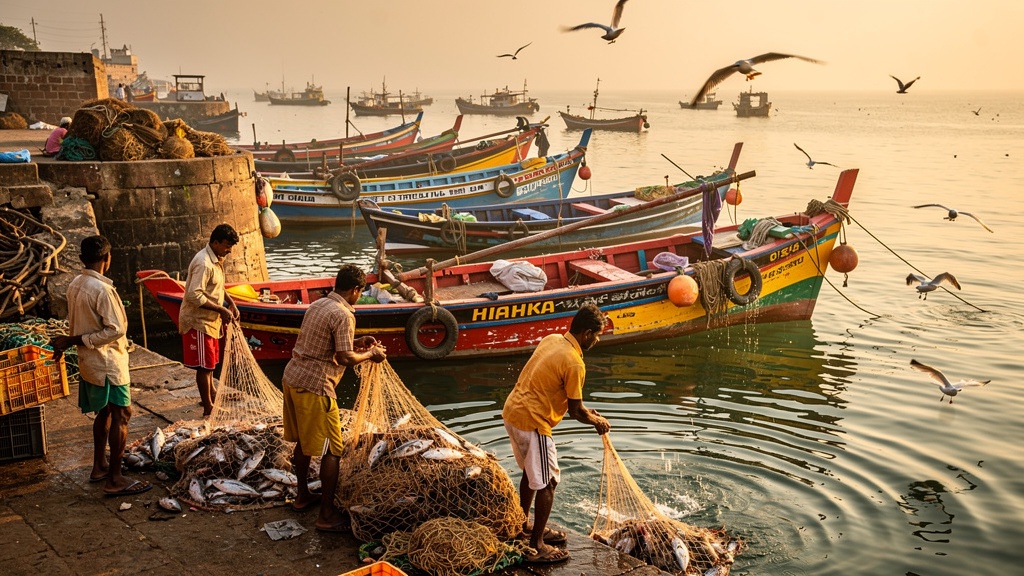
The harbour
Painted trawlers, repair yards, ice factories, nets drying in the sun. Walk the outer jetty early and you'll see the boats coming in.
Diu's main fishing harbour — a row of painted boats, a noisy fish auction at sunrise, and seafood kitchens selling the morning's catch fried within minutes of landing.
Vanakbara is the village that actually feeds the island. Most of the fish you eat in Diu's restaurants — pomfret, surmai, rawas, squid, prawns — lands here. Skip the polished forts and Baroque churches for an hour, and you walk straight into a working maritime economy: wooden trawlers, ice-rooms, the daily auction, and the dockside kitchens that turn one catch into lunch.
It's also the most useful place for visitors to understand how to eat seafood in Diu — the menu isn't a marketing exercise, it's whatever's been brought in that morning. Ask what's fresh, order simple preparations (fried, grilled, curry), and eat where the local workers eat.
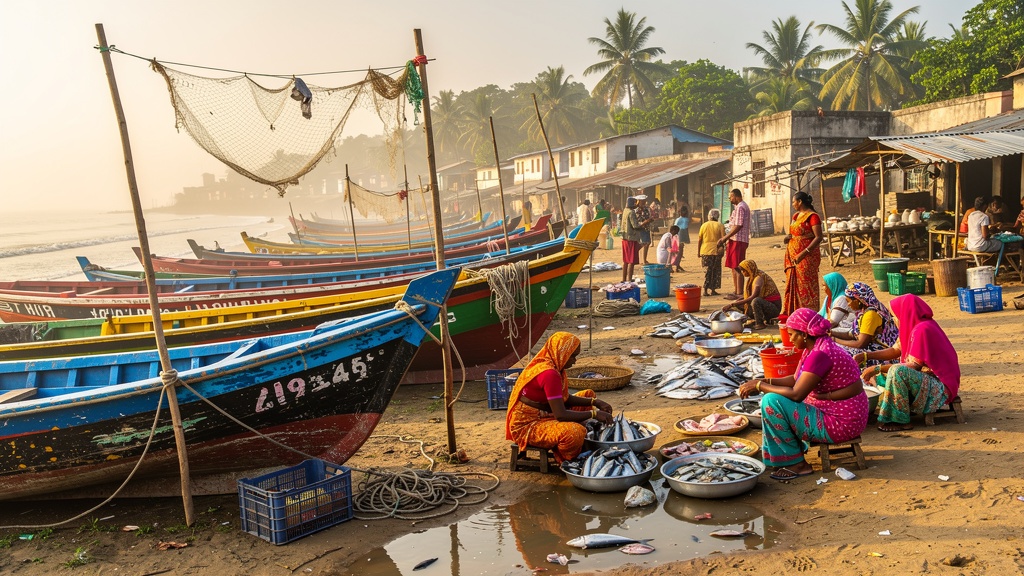
Painted trawlers, repair yards, ice factories, nets drying in the sun. Walk the outer jetty early and you'll see the boats coming in.
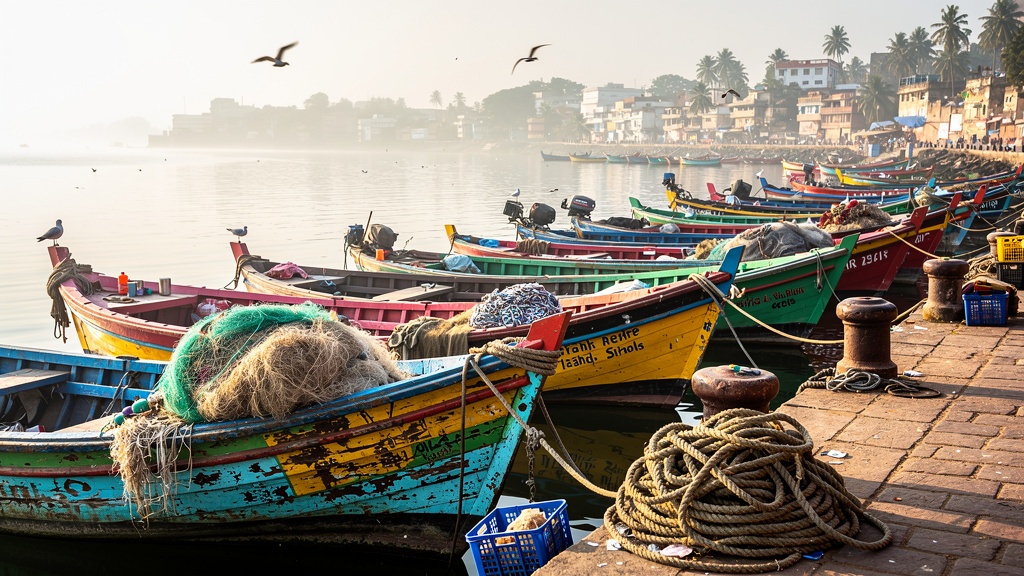
Half a dozen different sizes — small owner-operator vessels up to multi-day trawlers. Each is named, often loudly, in Gujarati or Hindi script.
Box-by-box auction once the boats discharge. Loud, fast, and genuinely uninterested in tourists — which is exactly the point.
Vanakbara isn't a food court. The seafood kitchens that ring the harbour use the freshest catch of the day; menus are short and the fish is what's available, not what's printed.
Vanakbara is the southern anchor of any scenic drive around the island — combine it with a stop at Ghoghla in the morning, lunch at the harbour, then the fort and Nagoa for the rest of the day. See it in the 3-day plan →
Yes. It's a working village, not a tourist trap. Be respectful at the fish market — ask before photographing faces — and don't walk through drying nets or auction areas uninvited. Dress modestly going in and out of any temple on the way.
Catch comes in two rough waves: early morning around 6–8 am, and a smaller afternoon return around 2–4 pm. Winter mornings are the liveliest.
Generally yes — the kitchens at Vanakbara receive the morning's catch directly, so fish is at its freshest at lunch. Pick a kitchen with a long queue; that's the better signal than the menu board.