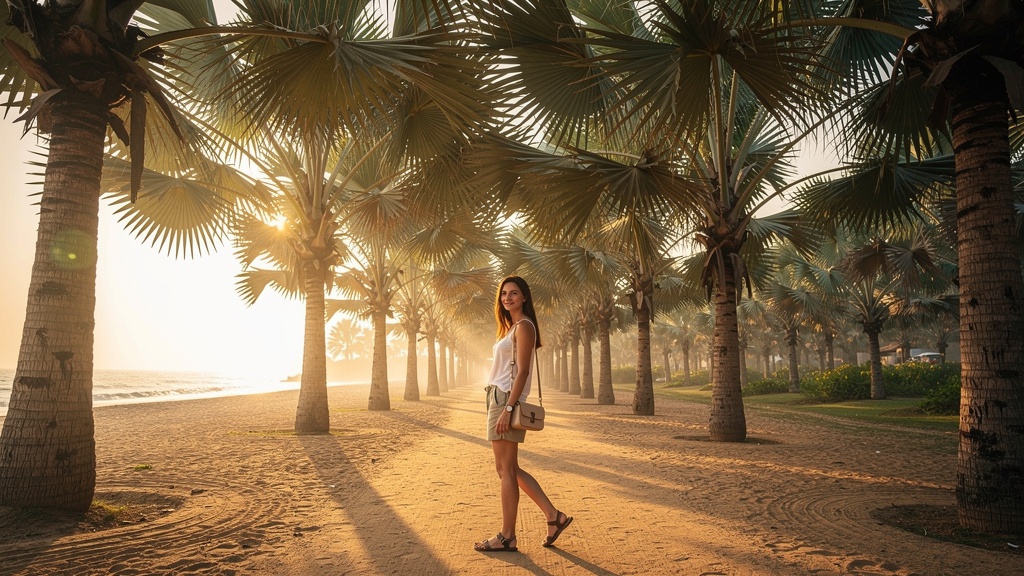
Nagoa beachside
The classic groves behind the bay — palms lean over the sand and the path, giving the postcard framing. Best in late afternoon light.
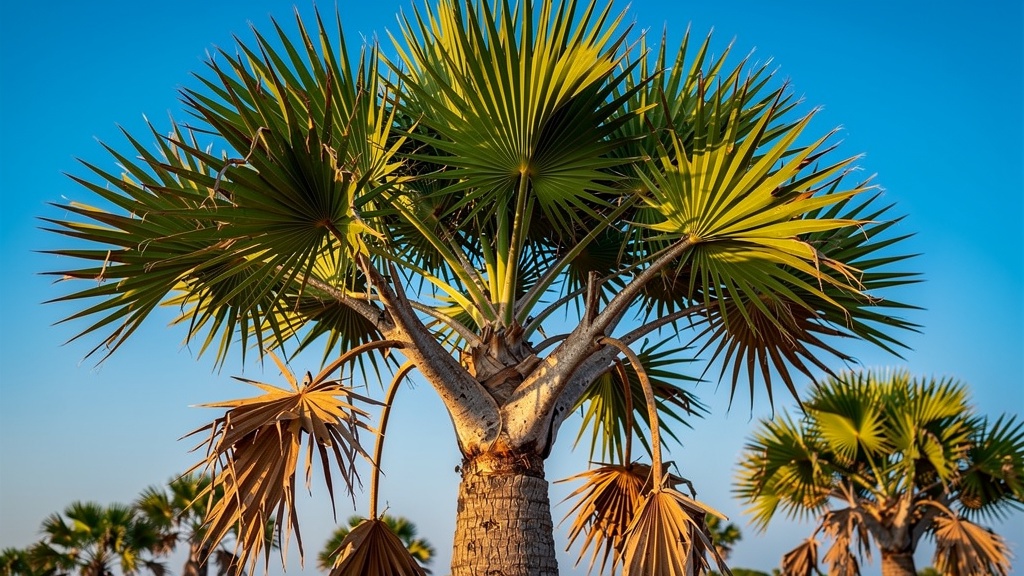
Most palms grow one crown. The Hoka grows a trunk that forks, and forks again — each branch crowned with its own fan of leaves. In India, Diu is essentially the only place you'll see it in numbers.
The Hoka is Hyphaene dichotoma, a doum-type palm — a relative of the Egyptian doum palm of the Nile valley. Doum palms are famous for their unusual branching habit: instead of a single trunk and crown, the trunk divides, and each division carries its own crown of stiff, fan-shaped leaves. Mature trees can look like a candelabra of green against the sky.
In India the Hoka is rare — found in real numbers mainly in Diu, with scattered plantings elsewhere. That rarity is a big part of the island's identity: the same silhouette appears in Diu's tourism branding, on signboards, and in every traveler's photo roll. The groves around Nagoa and along island roads are the easiest places to see them, and the fruit — a glossy, date-like drupe — is sold locally.
The classic groves behind the bay — palms lean over the sand and the path, giving the postcard framing. Best in late afternoon light.
Roadside plantings line the routes between town, Nagoa and Ghoghla — easy scooter-stop photography with no crowds at all.
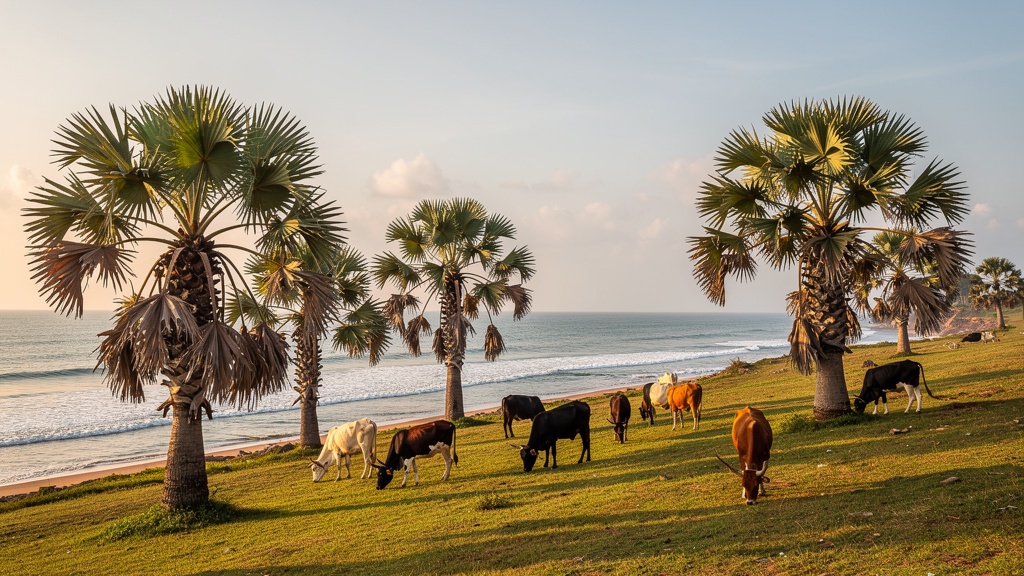
On the island's quieter west and north stretches, Hokas stand alone in grassland with the sea behind — the landscape shot.
Shoot upward against a clear sky to show the branching; or use the palms as natural frames for the beach. Golden hour (4:30–6pm) brings out the warm green. A wide lens handles the full candelabra best.
The Hoka is more than a curiosity — it's the island's living logo. It shades the beach, anchors the tourism brand, and gives Diu a botanical identity Goa simply doesn't have. Conservation-minded locals and the administration both treat the groves as assets worth protecting, and the palms feature in the push to reposition Diu as a family-friendly heritage-and-beach destination.
Combine a Hoka photo walk with Nagoa Beach (the groves are right there) and a Gangeshwar high-tide stop — all in one southern loop. Nagoa guide →
Not strictly — the species grows in parts of Africa and the Middle East, and a few ornamental plantings exist elsewhere in India. But Diu is the place in India where they grow naturally and abundantly, which is what makes them an island signature.
The glossy brown fruit is edible and mildly sweet; locals sometimes chew it or use it traditionally. It's sold in small quantities near Nagoa — a fun, honest local snack rather than a must-try delicacy.
They're evergreen, so any season works. After monsoon (October onwards) the canopy is freshest and greenest; winter light is best for photography.