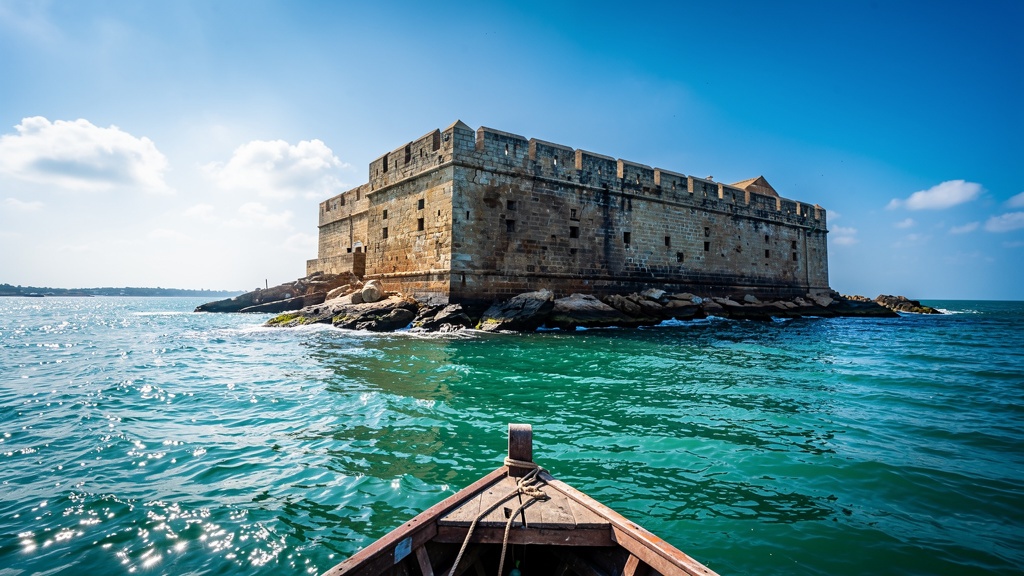
The boat ride
A short, choppy-but-fun crossing. The approach — fort growing out of the water — is the best photo of the whole trip.
A miniature Portuguese fort on a rocky islet in the channel — reached by local boat, and at night the most photographed landmark in Diu when it lights up.
Panikotha — Fortim do Mar, "the little fort of the sea" — was built by the Portuguese to guard the entrance to Diu's harbour channel. Where the main fort guards the island's eastern point, Panikotha sat mid-channel, a compact stronghold whose guns could rake any ship trying to slip past. It's a rare surviving example of a purpose-built sea fort in India.
Today it's mostly a romantic ruin: a small stone fortification on a wave-washed islet, its walls rising straight from the water. The boat ride out is short, the site is tiny, and the real magic happens at dusk, when the fort's lights come on and the whole structure glows against the dark sea — a view best taken from the main fort's ramparts.
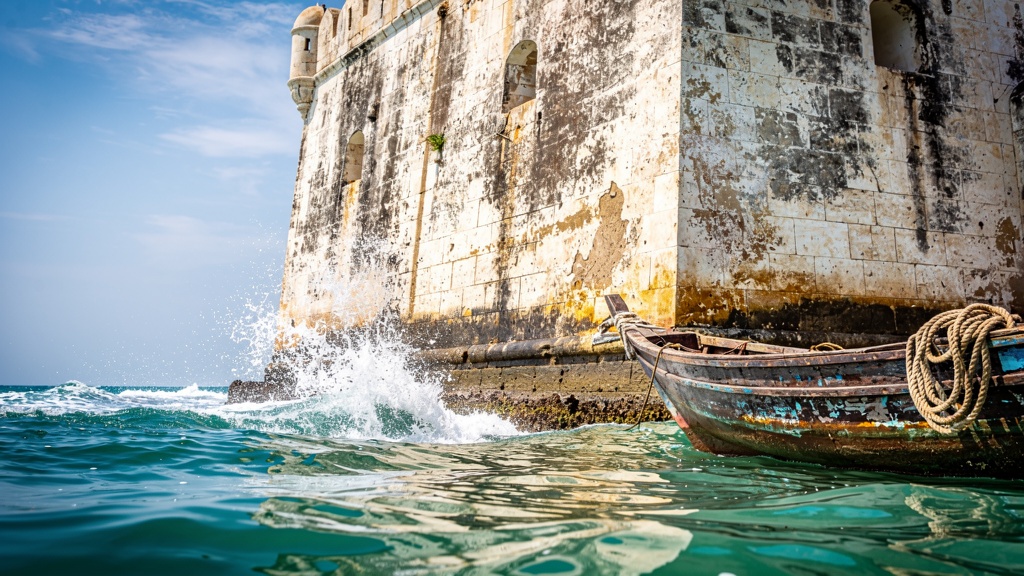
A short, choppy-but-fun crossing. The approach — fort growing out of the water — is the best photo of the whole trip.
Small, rough and atmospheric: walls, a tiny courtyard, sea on every side. Ten minutes on the rock is enough — it's the setting, not the size.
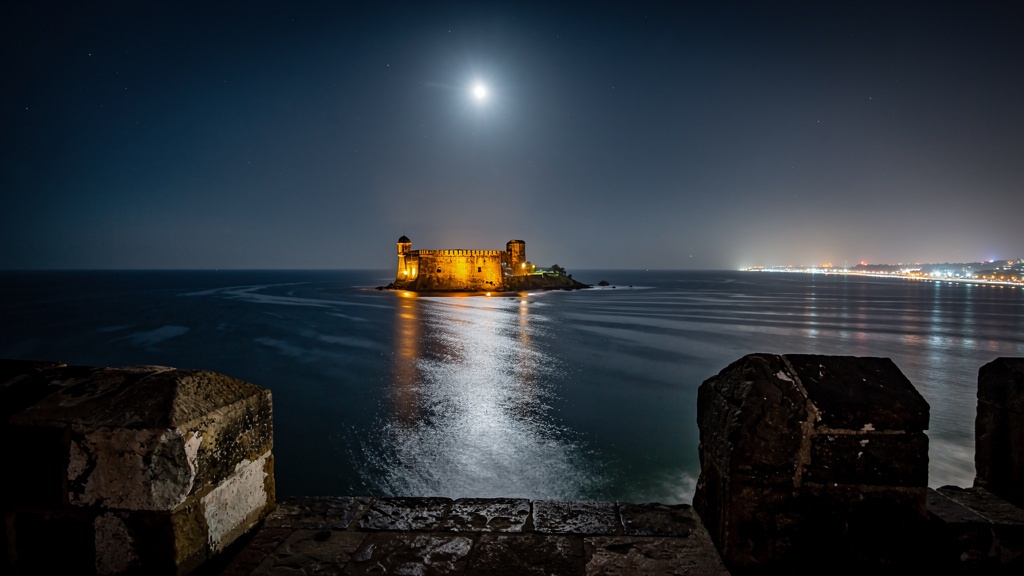
After dark the fort is illuminated. From the main fort's ramparts you get the classic shot: a tiny lit fortress floating on black water.
There's no fixed ticket office — boats gather near the fort side and the jetty, and you negotiate a round trip with a local operator. A few practical truths:
Panikotha is best bolted onto the fort morning (boat from the fort side) or saved for a late-afternoon + night-view combo: ride out around 4:30pm, then watch the lights come on from the main fort after dinner. See it in the 3-day plan →
Usually yes — boats land at a small jetty and you can walk the courtyard and walls. Access depends on sea state and the operator; it's a ruin, so wear grippy shoes.
Only 10–20 minutes each way — the fort is close offshore. The whole excursion rarely exceeds an hour and a half.
Just after full darkness, before the town lights wash out the sky — roughly 7–8pm in winter. Bring a tripod; the fort is small and far, so a long lens helps.