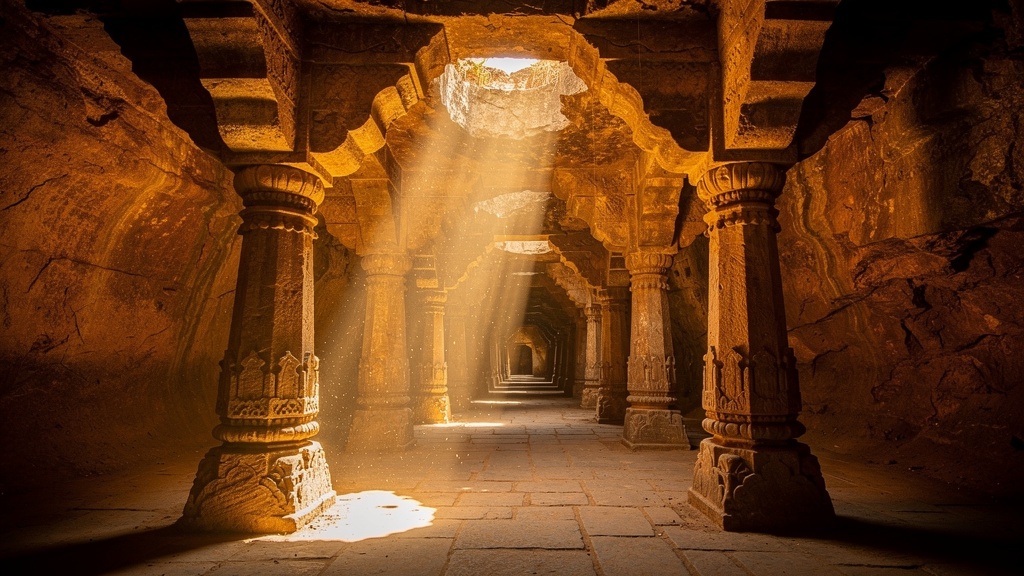
The rock maze
Rooms linked by narrow cuts, pillars left standing as quarry screens, ceilings hovering at head height in places — bring a torch app and watch your head.
Carved columns, archways and light shafts two minutes from the fort — abandoned Portuguese-era quarrying made this a honeycomb nobody planned.
Naida Caves wasn't built — it was left behind. For centuries Diu's builders quarried this soft, workable stone, cutting it into regular blocks for the fort, churches and town houses. The 20th-century quarrymen who continued the work stripped out slabs and pillars, and when mining stopped, the workings remained: a sprawling set of open-air rooms, columns and archways carved into the rock, connected by narrow passages.
Nobody calls it grand the way they do the fort. Its charm is quieter — the way afternoon sun drops through gaps in the roof onto sand-strewn floors, the acoustics, the sense of walking through a building nature is slowly taking back. Photographers treat it as Diu's best secret; locals call it "the caves" and use it for evening strolls.
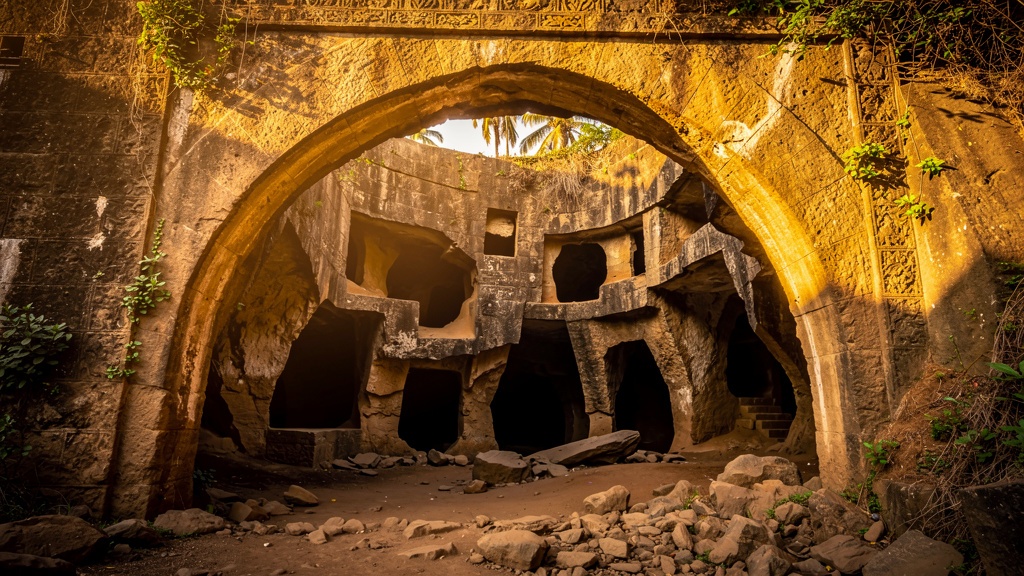
Rooms linked by narrow cuts, pillars left standing as quarry screens, ceilings hovering at head height in places — bring a torch app and watch your head.
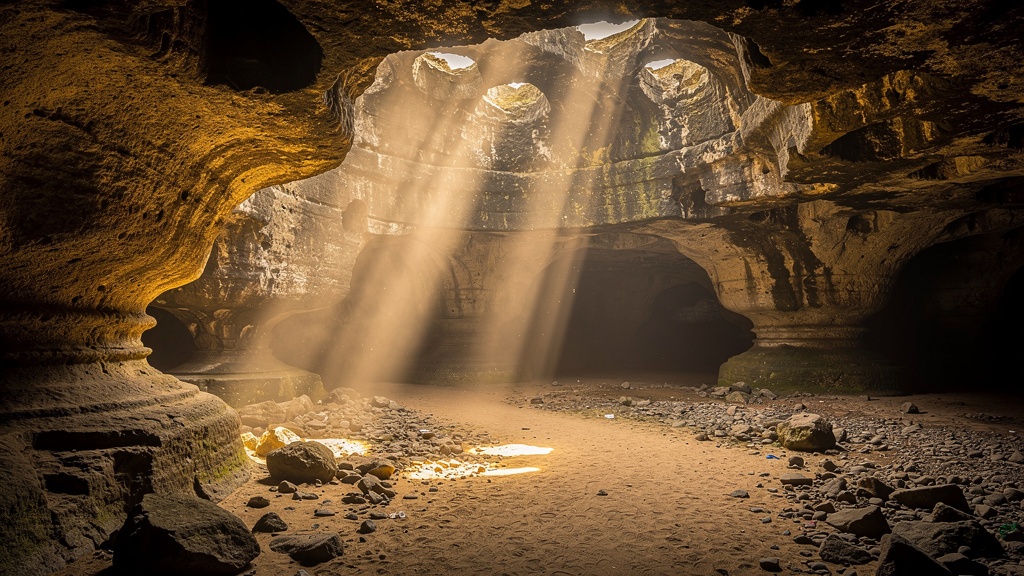
The famous shot: dust-filled sunbeams angling through roof gaps. Lighter skies (morning–early afternoon) give the strongest beams.
The site sprawls along a scrubby coastal strip between town and Nagoa — the walk in is part of the mood, especially near sunset.
Fort → Naida Caves → St. Paul's. All three sit within minutes of each other and take one unhurried morning. See it in the 2-day plan →
The caves are soft, unguarded and easily damaged — don't climb the pillars, don't carve initials, and avoid peak crowds if you can (the maze pinches). A tiny island absorbs a lot of feet; see practical tips for the fuller responsible-tourism picture.
Not in the geological sense — they're an abandoned stone quarry, open to the sky in places. "Caves" is the local name that stuck. That's why there are honeycomb rooms instead of tunnels.
Light beams are strongest mid-morning to early afternoon on clear days. For empty shots, come right after opening before tour groups; weekdays beat weekends.
With supervision, yes — no water or deep drop-offs in the main chambers, but footing is uneven, edges are unrailed and some passages are narrow. Keep younger kids in hand.