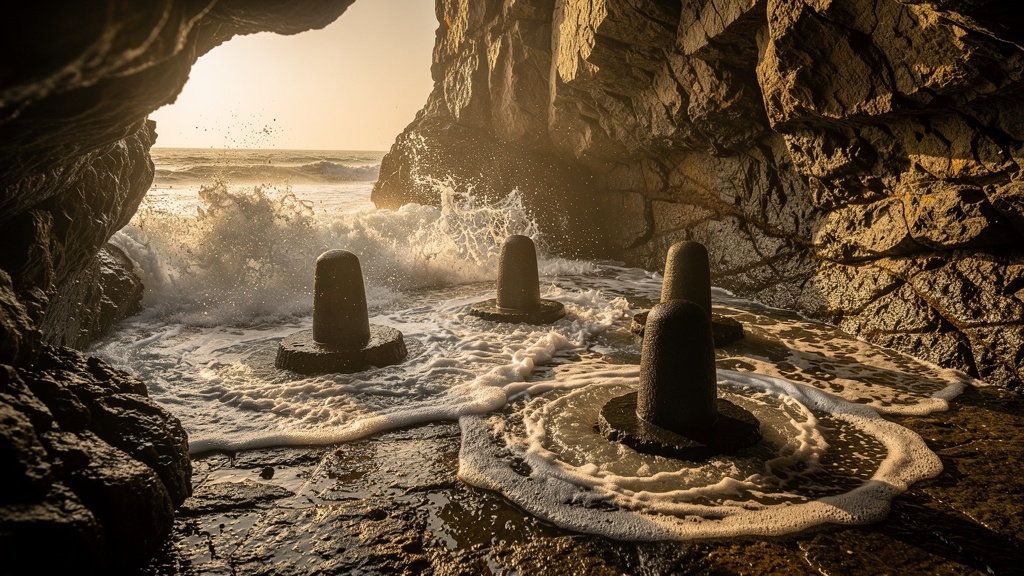
High tide
The lingams half-submerged, surges of foam rolling through the enclosure. Dramatic, photogenic and — timing permitting — the best slot of the day.
Set in a rocky cove at the island's edge, five carved Shiva lingams stand in the tide line — waves washing over them again and again, all day, every day.
Legend says the five pandavas honoured Shiva here during their exile, and the shrine has drawn worship from that outline ever since. Historically it's an old coastal shrine that the Portuguese era left intact — and modern Diu's Hindu and Jain households still visit on festival days.
What makes it unforgettable is simply where it is. Stairs cut into the cliff drop you to sea level, where a cluster of lingams stands inside a natural rock enclosure. At high tide the sea surges in and the waves break over the lingams themselves — an offering no priest performs. Pilgrims time their visit to the water; photographers time theirs to the foam.
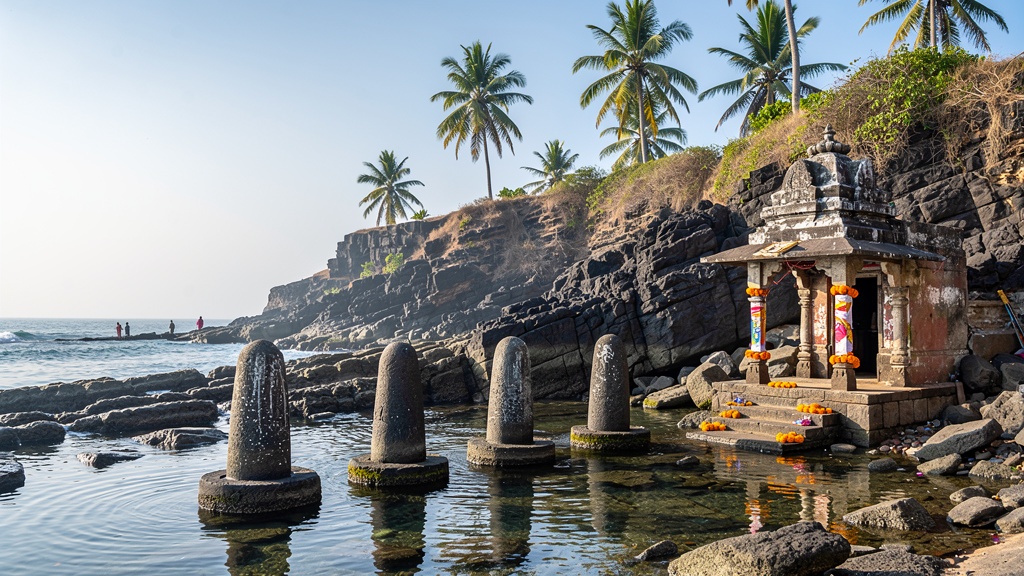
The lingams half-submerged, surges of foam rolling through the enclosure. Dramatic, photogenic and — timing permitting — the best slot of the day.
The channel empties and you can walk right around the lingams — a quieter, more intimate visit with better footing for families.
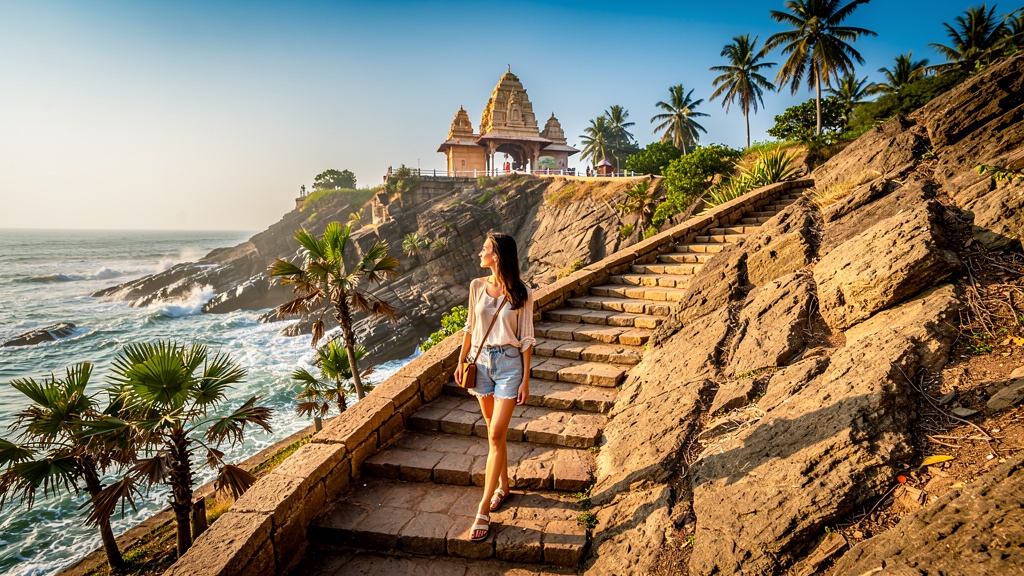
Steps hug the cliff between palms and rock — part of the ritual of arriving. Take it slowly; it's uneven and can be wet with spray.
Gangeshwar sits minutes from Nagoa Beach and a short ride from Chakratirth. Plan on Nagoa swim → Gangeshwar at high tide → Chakratirth sunset — one unhurried afternoon. See it in the 2-day plan →
Diu's tide range is modest but noticeable. Local apps and the fishermen's schedule both work — or simply ask at any shack: they know to the hour. Aim to arrive 30 minutes either side of high water for the foam show.
This is an active shrine, not a stage. Remove footwear before the enclosed area, dress modestly (cover shoulders and knees), and don't crowd the lingams for selfies when others are praying.
Around high tide for the dramatic wave wash; early morning or weekday afternoons for fewer people. Monsoon visitors should expect slippery rocks and stronger surge — tread very carefully.
Yes — it's often called "the Nagoa sea temple." Address it as Gangeshwar Mahadev Temple; it's the one 10 minutes from Nagoa's sand.
No — the cove is rocky and surge-prone. Swimming anywhere near the temple is unsafe; Nagoa is five minutes away for that.